Pocket Watch Restoration Basics
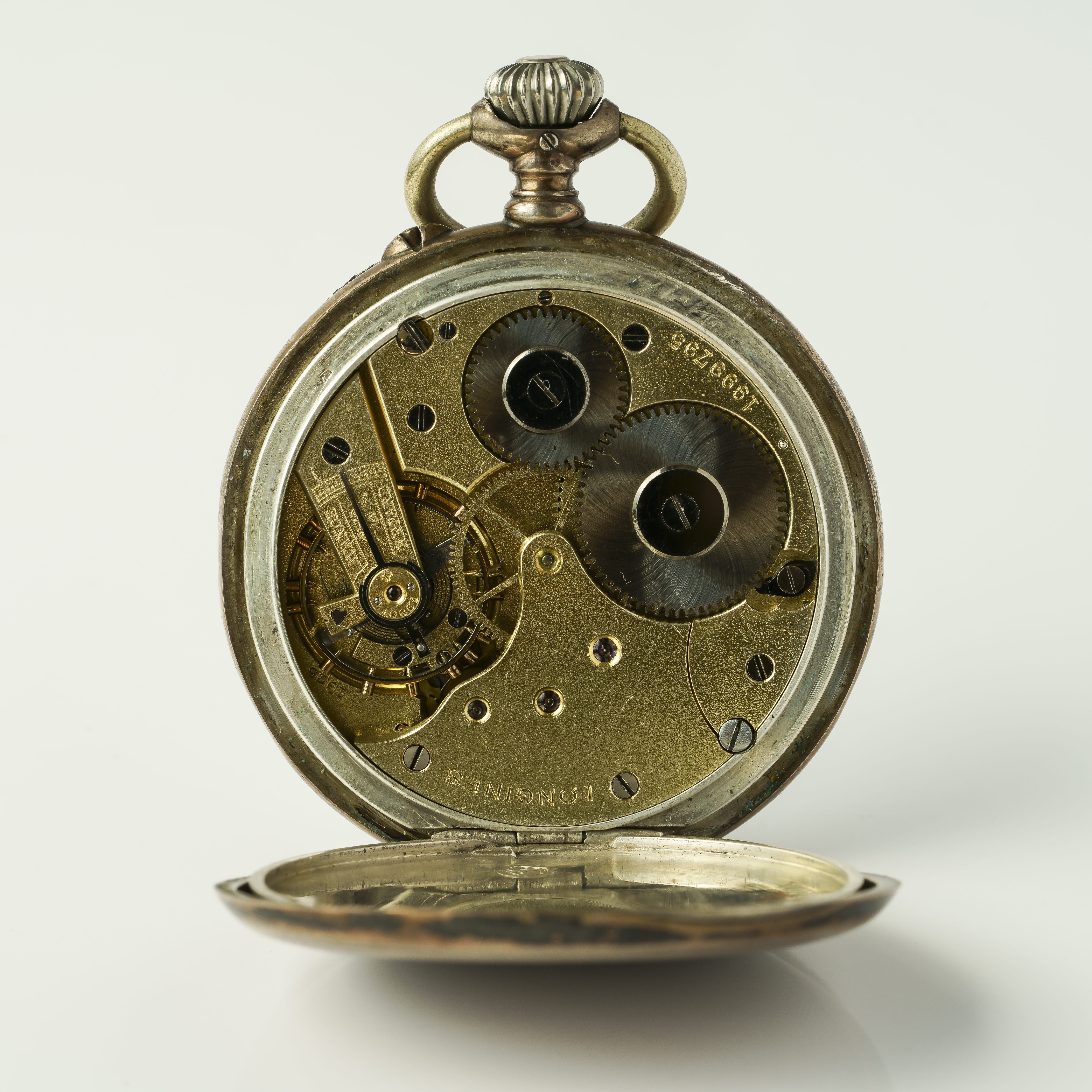
Pocket watches in Polish collections range from Swiss export levers of the early twentieth century to domestic presentation pieces and inherited family watches with damaged cases. Restoration at a basic level means stabilizing the case, documenting the calibre, assessing mainspring and balance condition, and deciding whether timing adjustment is appropriate without a full strip-down.
Case types and opening
Hunter cases use a front lid and often a secondary crystal over the dial; demi-hunter cases expose part of the dial through an outer chapter ring. Opening begins with locating the lip or pry point on the inner back — never forcing a knife against a hallmarked lid. Swiss silver cases marked 0.800 or 0.935 appear frequently in import records to Polish retailers documented in museum catalogues.
Once the inner cover is removed, the movement is held by the case neck or hinge. Note whether the movement is keyed to the case — a replacement movement in an original case is common and affects value more than timing.
Movement identification
Record the signatures on the dial and movement, jewel count marked on the top plate, and serial numbers where present. Swiss lever calibres often show fifteen jewels for a standard grade and higher counts for adjusted positions. Polish-owned Longines, Omega, and local retailer-signed calibres follow the same layout: barrel at centre bottom, gear train toward the balance at twelve o'clock on the dial side.
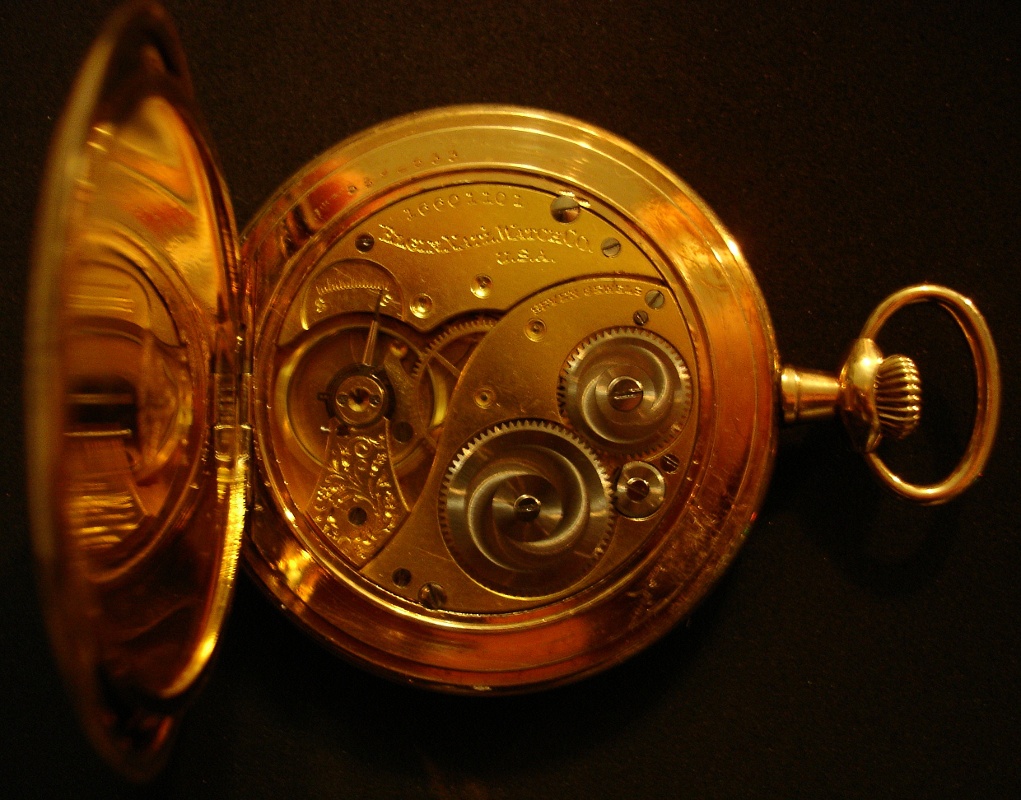
Elgin and other American pocket watches imported into Europe use a different plate layout but the same principles: let down the mainspring before removing the crown and stem.
Mainspring safety
A broken or set mainspring stops the watch with little warning. In a closed barrel, replacement requires barrel removal; in an open barrel with a removable cover, the spring can be exchanged on a mainspring winder. Attempting to let down a rusted spring without a proper key risks barrel damage and injury.
Timing positions
Adjusted watches are timed in several positions — dial up, dial down, crown down, and sometimes crown left — because gravity affects the balance differently in each orientation. A watch that runs well dial-up but stops crown-down may have a balance staff or endshake fault rather than a simple regulation issue.
When not to run the watch
- Visible rust on the balance or hairspring
- Loose dial feet scratching the motion work
- Missing or cracked jewels on the escapement
- Case lid that binds the stem when closed
Storage in Polish climate
Leather pouches absorb moisture if stored in unheated attics. Archival storage described in NAWCC literature recommends stable room temperature, silica gel in the container but not touching the movement, and periodic winding only when the movement is known to be sound.